
Understanding the Consumption task
Understanding consumption data
Once you have configured the Consumption task inputs and submitted them, you can explore the calculated information.
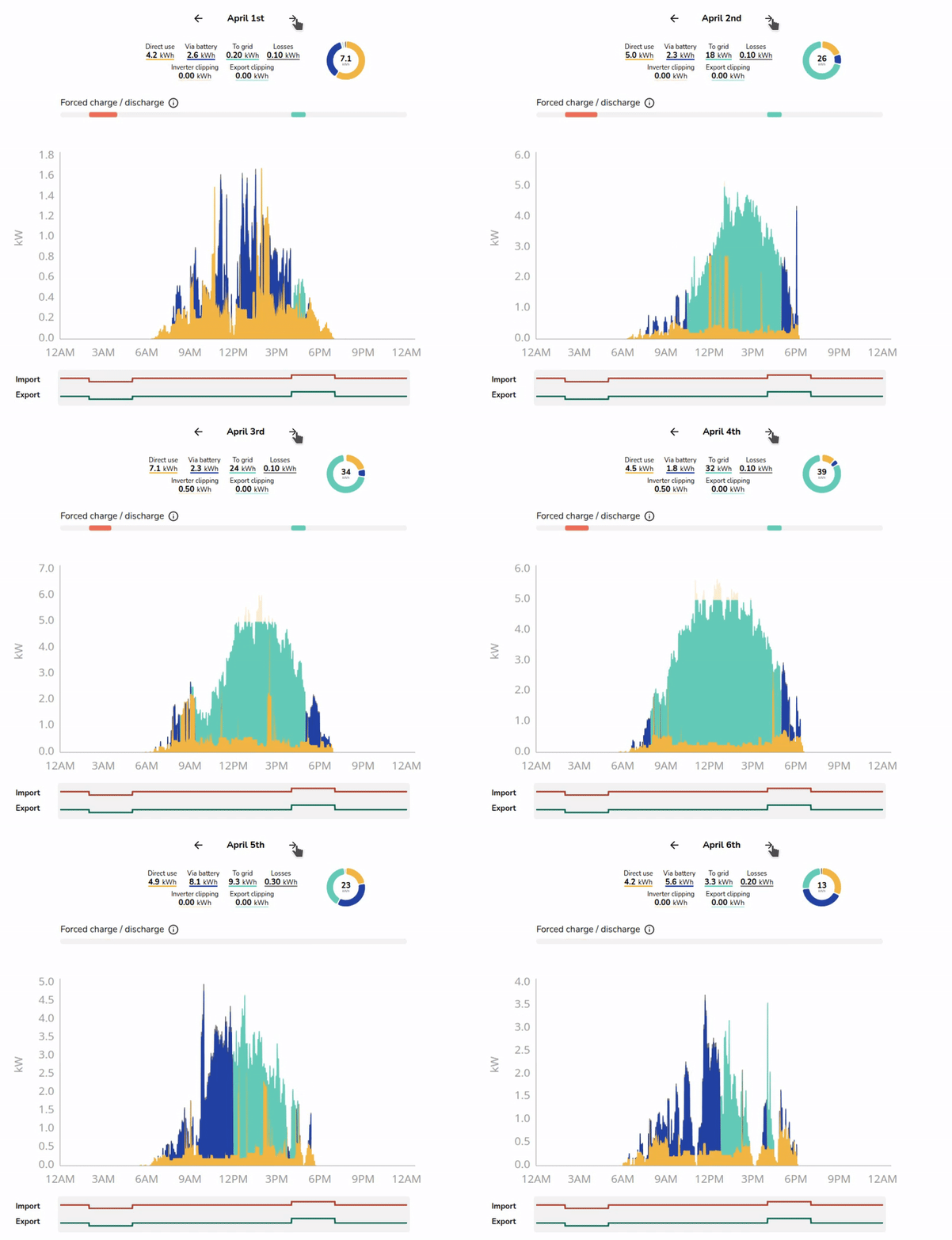
The left-hand side shows the full results of the consumption task calculations with interactive graphs and detailed insights. For each section, the top graph gives you the annual figures and the lower graph gives daily figures.
All graphs use the following key to help you understand the generated data:
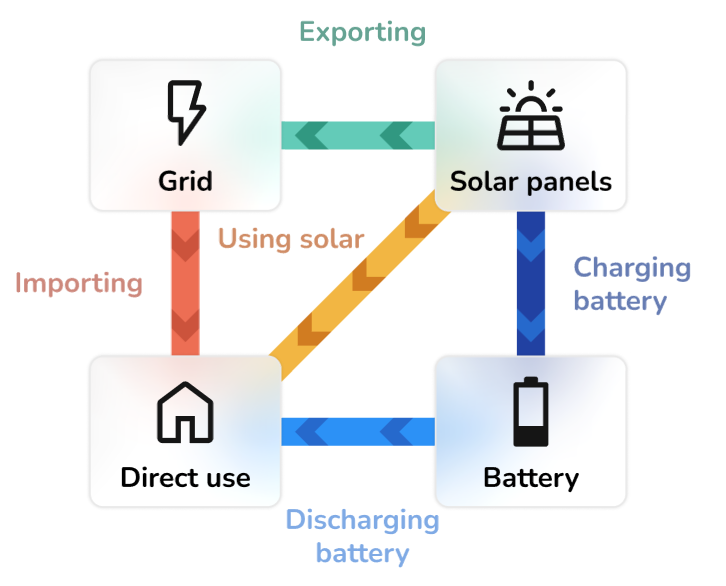
Generation
- This shows the estimated annual generation of the system and whether the generated energy is used directly in the house, used to charge the battery or exported to the grid. It will also show inverter and export limitation clipping if you've turned this on.
- Navigate between the dates in the lower graph to see daily insights.
Consumption
- This shows the total annual energy consumption of the property and where this energy will come from.
- It shows how much energy is expected to be supplied directly from the solar array, via the battery or imported from the grid.
Import and export
- This shows the likely flow of energy to and from the grid over the course of a year.
- It's likely that there will be more energy exported during summer when the solar array is generating more energy, and more energy will be imported from the grid during winter months.
Financial benefits
- This shows the money spent and earned on electricity flowing to and from the grid over the course of a year based on selected tariffs.
- It allows you to see the total money earned from export payments versus the money spent on imports, and how would compare to having no solar installed.
Battery utilisation
- This helps you understand the modelled utilisation of the battery over the course of the year based on the amount of the the available battery capacity that is actually charged and discharged each day.
- Utilisation of over 100% is possible at times where a battery is charged and discharged more than once during a day.
- Low battery utilisation can be due to either insufficient PV generation to charge the battery (often the case in winter, or on cloudy days), or because loads are small overnight and the battery does not fully discharge. If you have low battery utilisation you may want to reduce the size of the batteries or recommend forced charging of the batteries on an overnight tariff to the property owner.
If you would like to use the Easy PV self-consumption calculations as the basis for your financial projections in the customer proposal, make sure it is selected in the financial task.